
Explore the Workshops
Colour Theory & Watercolour Summer Short Course
In 1791, the German poet Goethe borrowed a glass prism but left it unused for a long time. When he finally looked through it at a blank, sunlit wall, he expected to see a rainbow. Instead, the wall remained plain white. This single moment sparked a legendary scientific debate.
In the world of watercolour, we shall explore the historical debate that has shaped our perception of colour by comparing the contrasting ideas of Sir Isaac Newton (1643 - 1727) and Johann Wolfgang von Goethe (1749 – 1832), while also drawing on insights from modernist master Paul Klee. Participants will learn the foundational techniques of watercolour to create radiant artwork.
We will examine Newton’s physical prism of split light alongside Goethe’s poetic and psychological approach to human emotional responses to colour. By mastering the essential methods of watercolour painting, we will build depth and vibrancy through layers of transparent washes.
Together, we will create a series of images that illustrate advanced colour interactions (hues, tones, and saturation), leading to a portfolio of luminous studies that reflect historical colour philosophies. We will then move from structured technical colour exercises into independent exploration, culminating in a unified series of related artworks (abstract or realistic) that tell a story through colour.
By Csaba
“Colours are the deeds and the sufferings of light” — Johann Wolfgang von Goethe
About The Workshop Leader
Csaba studied painting and art history in Budapest and trained as a Waldorf teacher in London. With over ten years of experience at Ringwood Waldorf School, he teaches art, art history, and history. In addition to his teaching role, Csaba leads art workshops, offers adult educational courses, and organises the Class 12 cultural trip to Italy, which focuses on the Italian Renaissance.
The Schedule
When: Friday 17:00–21:00, Saturday 09:00–16:00, Sunday 09:00–13:00
Dates: 14-16 and 21-23 August 2026
Course Fee: £160 per weekend (including materials: watercolour paper, watercolour paint, acrylic gouache and brushes)
Concessions: Available, please enquire
How to Register: Register your interest at the school office or online.
Location: The Art Room, Ringwood Waldorf School, Folly Farm Lane, Ringwood, BH24 2NN
This course is open to all skill levels and is perfect for anyone interested in colour and painting, with no prior experience required. The workshop is structured as one course in two parts; nevertheless, each weekend can also be taken as a standalone session. As places are limited, early booking is recommended.
Please email Csaba for more information and to reserve a place.
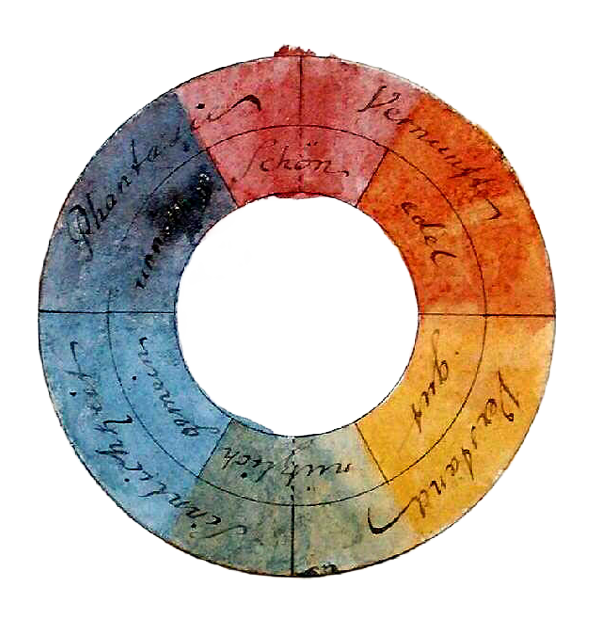
Symmetric colour wheel by Johann Wolfgang von Goethe, 1809
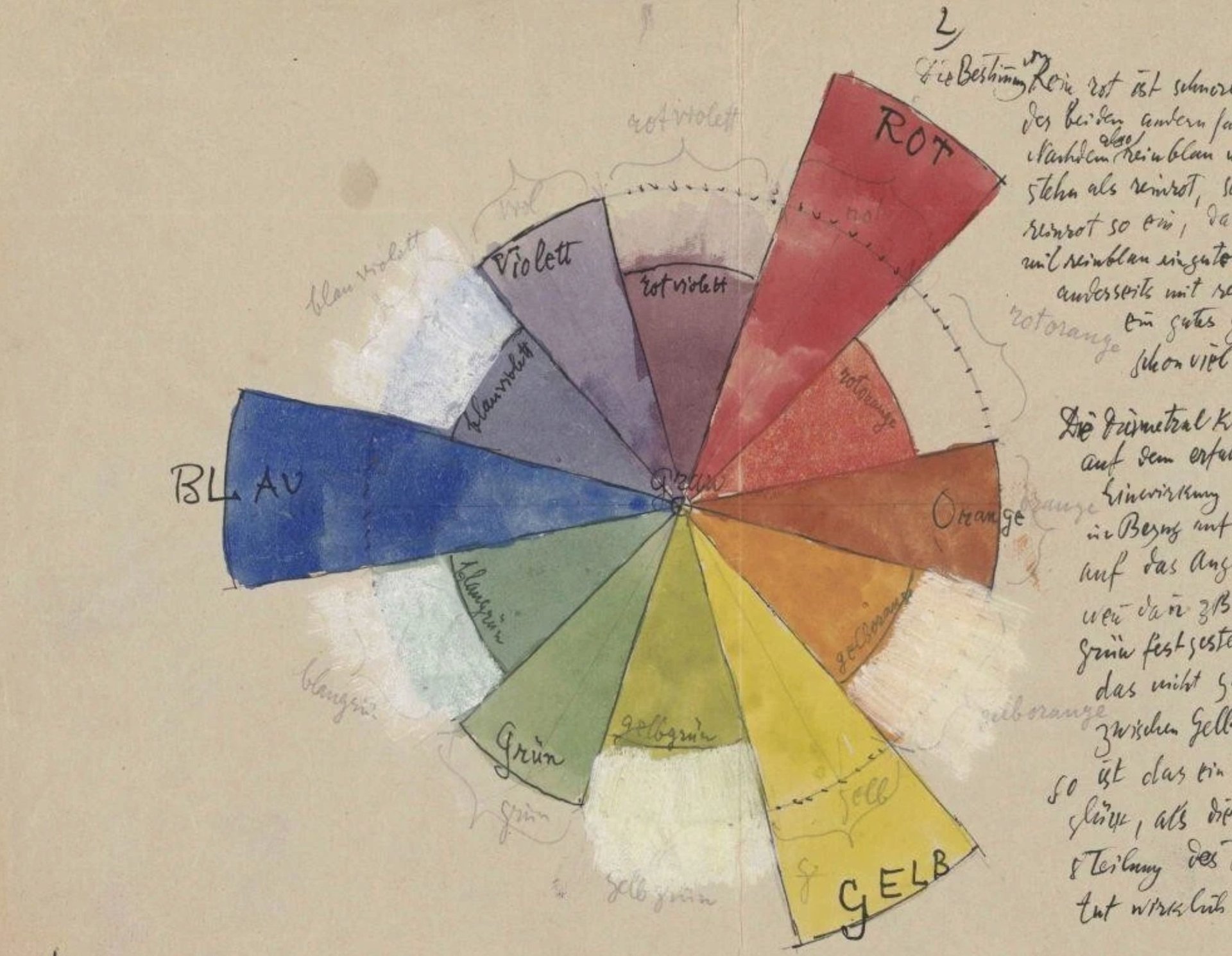
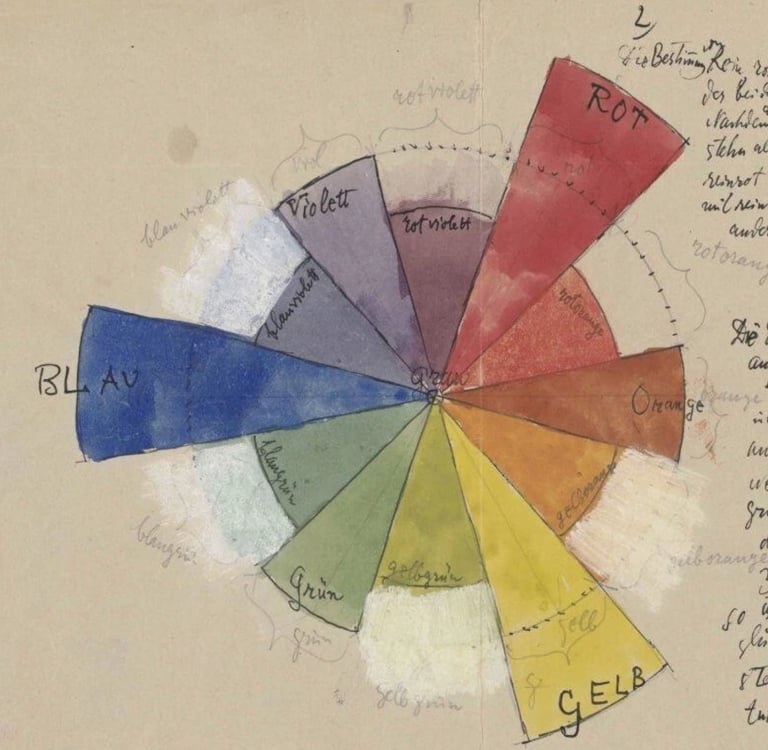
Colour Theory by Paul Klee, 1928